Affordable when you don't need it yet
The background
Running an ocean forecast on a ship is not free. It takes real compute on a box with other jobs, so when to run one is a decision somebody makes, not a detail to optimise away.
The obvious answer is to run when there is room. That answer has a hole in it, and the hole only shows when you set it beside the rule that stops the system going quiet.
The requirement
A run states what it will cost before it starts, then spends it. The scheduler gains a second question beside is a forecast warranted: can we afford one now. A run waiting on cost must look different from one refused, and different again from one nobody asked for.
The options considered
We wrote it the natural way first: affordable when the run fits inside what is left of the standing forecast's life. Then we read it against the rule that says a forecast must happen eventually — which fires exactly when the standing one expires. At that instant nothing fits, so nothing is ever affordable again, and the loop never forecasts again.
Inverted, the same numbers describe real behaviour. Wait while the standing forecast still has more life than the run costs; start as that margin runs out, so the new one lands as the old one lapses.
The demo
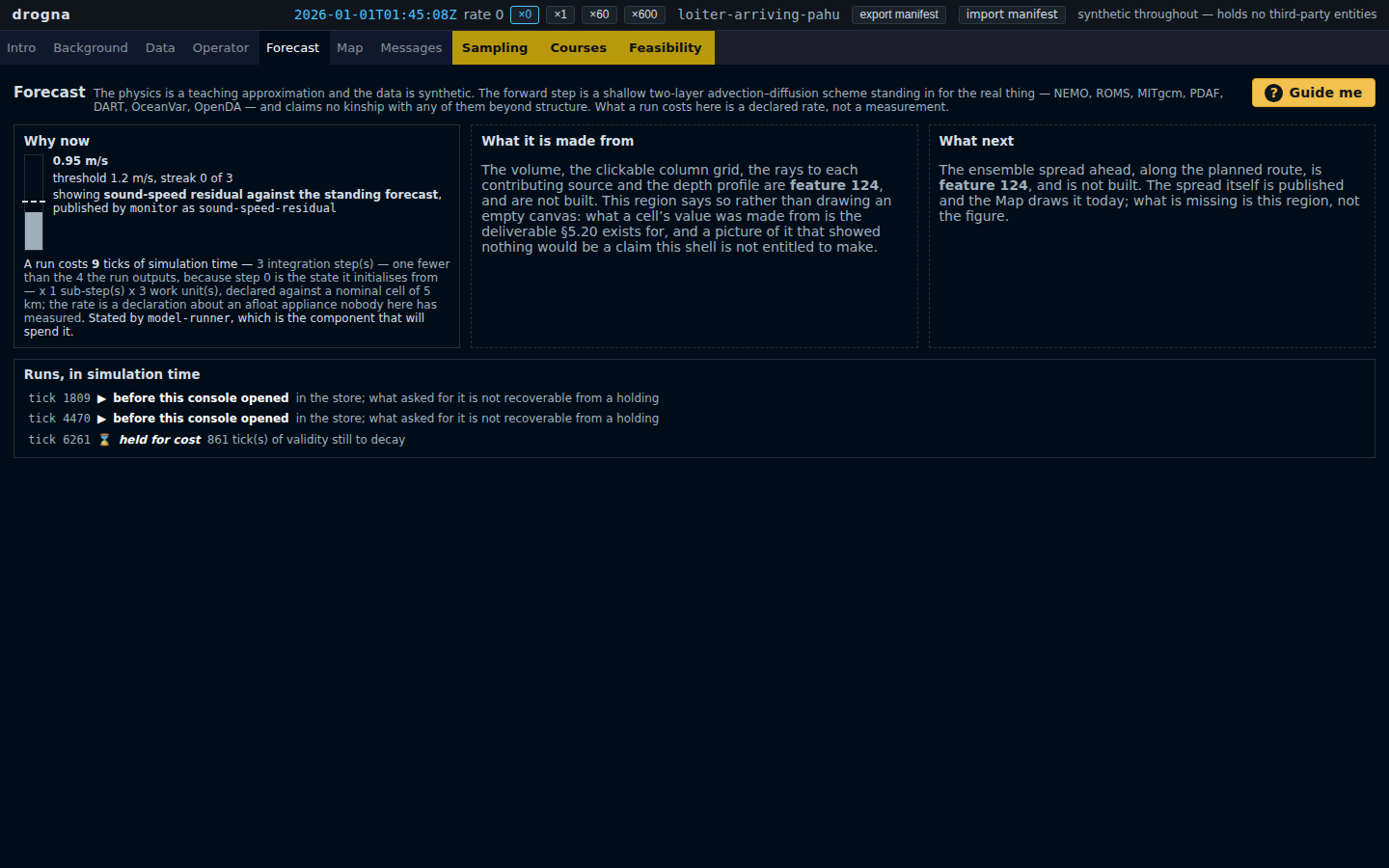
Open the Forecast tab. The gauge is the disagreement between what the instruments measure and what the forecast said, with the cost of a run under it in the same frame. Along the foot, runs in simulation time — and a wait, saying how much life the standing one has left.